The US flag: why 50 stars and 13 stripes
The flag of the United States has 50 white stars on a blue field, one for each state, and 13 horizontal stripes, 7 red and 6 white, one for each of the original 13 colonies. The 50-star version has been the official flag since July 4, 1960, after Hawaii became the 50th state. It is the 27th version of the flag: the number of stars grew as new states joined, and the stripes have stayed at 13 since 1818.
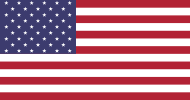
Why 13 stripes and 50 stars
On June 14, 1777, the Second Continental Congress resolved that the flag of the United States be 13 stripes, alternate red and white, and that the union be 13 stars, white in a blue field, "representing a new constellation". June 14 is Flag Day for that reason.
When Vermont and Kentucky joined, the Flag Act of 1794 gave the flag 15 stars and 15 stripes from May 1, 1795. That is the flag that flew over Fort McHenry in 1814 and inspired "The Star-Spangled Banner". Adding a stripe for every state could not last, so the Flag Act of April 4, 1818 went back to 13 stripes for good and set the rule still in the US Code today: one star for each state, and a new star added on the Fourth of July after a state is admitted.
The 27 versions of the flag
Each row is a flag that became official. States admitted between two Fourths of July shared one new flag; five states admitted between 1796 and 1817 waited for the 1818 law to get their stars.
| Stars | Official from | In use | New stars for |
|---|---|---|---|
| 13 | June 14, 1777 | 1777 to 1795 | The 13 original states |
| 15 | May 1, 1795 | 1795 to 1818 | Vermont and Kentucky |
| 20 | July 4, 1818 | 1818 to 1819 | Tennessee, Ohio, Louisiana, Indiana and Mississippi (stars held back until the Flag Act of 1818) |
| 21 | July 4, 1819 | 1819 to 1820 | Illinois |
| 23 | July 4, 1820 | 1820 to 1822 | Alabama and Maine |
| 24 | July 4, 1822 | 1822 to 1836 | Missouri |
| 25 | July 4, 1836 | 1836 to 1837 | Arkansas |
| 26 | July 4, 1837 | 1837 to 1845 | Michigan |
| 27 | July 4, 1845 | 1845 to 1846 | Florida |
| 28 | July 4, 1846 | 1846 to 1847 | Texas |
| 29 | July 4, 1847 | 1847 to 1848 | Iowa |
| 30 | July 4, 1848 | 1848 to 1851 | Wisconsin |
| 31 | July 4, 1851 | 1851 to 1858 | California |
| 32 | July 4, 1858 | 1858 to 1859 | Minnesota |
| 33 | July 4, 1859 | 1859 to 1861 | Oregon |
| 34 | July 4, 1861 | 1861 to 1863 | Kansas |
| 35 | July 4, 1863 | 1863 to 1865 | West Virginia |
| 36 | July 4, 1865 | 1865 to 1867 | Nevada |
| 37 | July 4, 1867 | 1867 to 1877 | Nebraska |
| 38 | July 4, 1877 | 1877 to 1890 | Colorado |
| 43 | July 4, 1890 | 1890 to 1891 | North Dakota, South Dakota, Montana, Washington and Idaho |
| 44 | July 4, 1891 | 1891 to 1896 | Wyoming |
| 45 | July 4, 1896 | 1896 to 1908 | Utah |
| 46 | July 4, 1908 | 1908 to 1912 | Oklahoma |
| 48 | July 4, 1912 | 1912 to 1959 | New Mexico and Arizona |
| 49 | July 4, 1959 | 1959 to 1960 | Alaska |
| 50 | July 4, 1960 | 1960 to today | Hawaii |
The 48-star flag flew for 47 years, from 1912 to 1959. The 50-star flag passed that mark on July 4, 2007, and has been in use longer than any other version since.
Proportions and layout
The flag's design is fixed by Executive Order 10834, signed by President Eisenhower on August 21, 1959, the day Hawaii was admitted. The flag is 1.9 times as wide as it is high, the blue union covers the top seven stripes, and the 50 stars sit in nine rows that alternate six and five stars.
What the colors mean
No law gives the colors a meaning. The explanation most often quoted is Charles Thomson's, written in 1782 for the same three colors on the Great Seal of the United States: white for purity and innocence, red for hardiness and valor, and blue for vigilance, perseverance and justice.
Put the stars in order
The admission order game asks you to sort the states by the year their star was added.
Play the admission order gameFrequently asked questions
How many stars and stripes are on the US flag?
Fifty stars, one for each state, and 13 stripes, 7 red and 6 white, one for each of the original 13 colonies.
When did the US flag get 50 stars?
On July 4, 1960, the first Fourth of July after Hawaii was admitted as the 50th state on August 21, 1959.
How many versions of the US flag have there been?
27, from the 13-star flag of 1777 to the 50-star flag of 1960. The number of stars changed each time; the 13 stripes have been the rule since 1818.
When is a new star added to the flag?
Under the Flag Act of 1818, still in the US Code (4 U.S.C. section 2), a new star is added on the Fourth of July after a state is admitted.
Related guides
Last updated: